







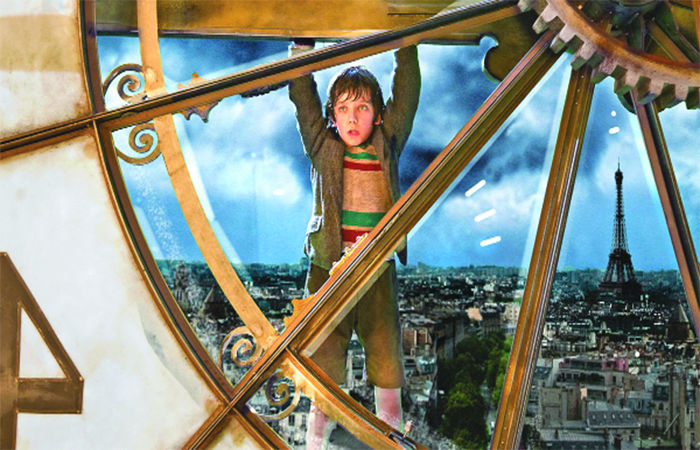
- What if an old clock, a broken robot, and a lonely boy could unlock the forgotten magic of cinema? Hugo is a thrilling, heartwarming adventure set in Paris that celebrates curiosity, kindness, and creativity. It's a film that feels like a fairy tale, a mystery, and a love letter to movies-all rolled into one.
- Movie Time
- Beautiful Films Every Kid Should Watch
H ugo tells the story of Hugo Cabret, a clever orphan boy living secretly inside the walls of a grand Paris train station in the 1930s. His job? Keep the station's giant clocks running smoothly. His secret mission?
Fix a strange automaton-a mechanical man left behind by his father.
Hugo believes the automaton hides a message from his late dad. But to repair it, he needs a missing key. That key comes from Isabelle, a book-loving girl with a brave heart. Together, they sneak through the station, dodge a strict inspector, and slowly uncover a beautiful mystery.
The story takes a magical turn when the children discover that Isabelle's grumpy godfather is actually Georges Méliès, one of the world's first movie magicians. Once famous for creating fantastic films with rockets, moons, and monsters, Méliès has been forgotten by the world-and by himself.
So Hugo becomes more than an adventure. It becomes a journey about remembering who you are, finding your purpose, and keeping dreams alive, even when life feels broken.
How was the movie made?
The movie is based on the award-winning children's book The Invention of Hugo Cabret by Brian Selznick. The big surprise? The director.
Instead of crime dramas and intense thrillers, Hugo was directed by Martin Scorsese-one of the greatest filmmakers in history.
Why would Scorsese make a children's film?
Because Hugo is actually about the birth of cinema.
Scorsese once said:
"This is really a movie about the importance of movies to me… and how they saved me as a kid."
To bring early cinema back to life, Scorsese used 3D technology, not for cheap thrills, but to make viewers feel like they were inside the clockwork world of Paris. He carefully recreated Méliès' original film sets, costumes, and camera tricks-right down to hand-painted backdrops.
Another beautiful quote from Scorsese:
"Movies are memories, and memories are what we are."
Every frame of Hugo is designed like a moving painting-warm lights, soft snow, ticking gears, and magical motion.
What should kids learn from Hugo?
This movie quietly teaches some powerful lessons-without ever feeling like a lecture.
Everyone has a purpose
Hugo believes broken things don't belong. He says, "If the world is one big machine, then everyone has a reason to be here." Kids learn that they matter, just as they are.
Kindness can heal wounds
Méliès becomes bitter because he's forgotten. Hugo and Isabelle remind us that kindness and curiosity can heal even the saddest hearts.
Never give up on creativity
Méliès stopped dreaming because the world stopped watching. The film tells kids: Create anyway. Dream anyway.
Books, movies, and art keep history alive
The past isn't boring-it's full of wonders waiting to be rediscovered.
Hugo does not have a sequel. And honestly, it doesn't need one. The story is complete-like a perfectly wound clock.
However, The original book has inspired theatre adaptations in schools and stage productions worldwide. Georges Méliès' life and films have been explored in documentaries and film history TV shows, many of which are now used in classrooms.
Final Words
In a world of fast reels and noisy screens, Hugo gently reminds us to slow down, look closely, and listen to stories-especially forgotten ones.
It tells kids:
You are not an accident.
Your dreams matter.
And magic is real-if you're willing to believe in it.
Interesting titbits & awards
Here are some fun and fascinating facts about Hugo:
It lovingly recreates scenes from Méliès' famous film A Trip to the Moon (1902).
The ticking clocks are almost like characters themselves!
It was one of the first family films to use 3D in a truly artistic way.
Major Awards & Nominations
Hugo received 11 Academy Award nominations-a huge number! It won 5 Oscars, including: Best Cinematography, Best Visual Effects, Best Art Direction, Best Sound Mixing, Best Sound Editing. It also won Golden Globe Awards for Best Director (Scorsese) and Best Original Score.